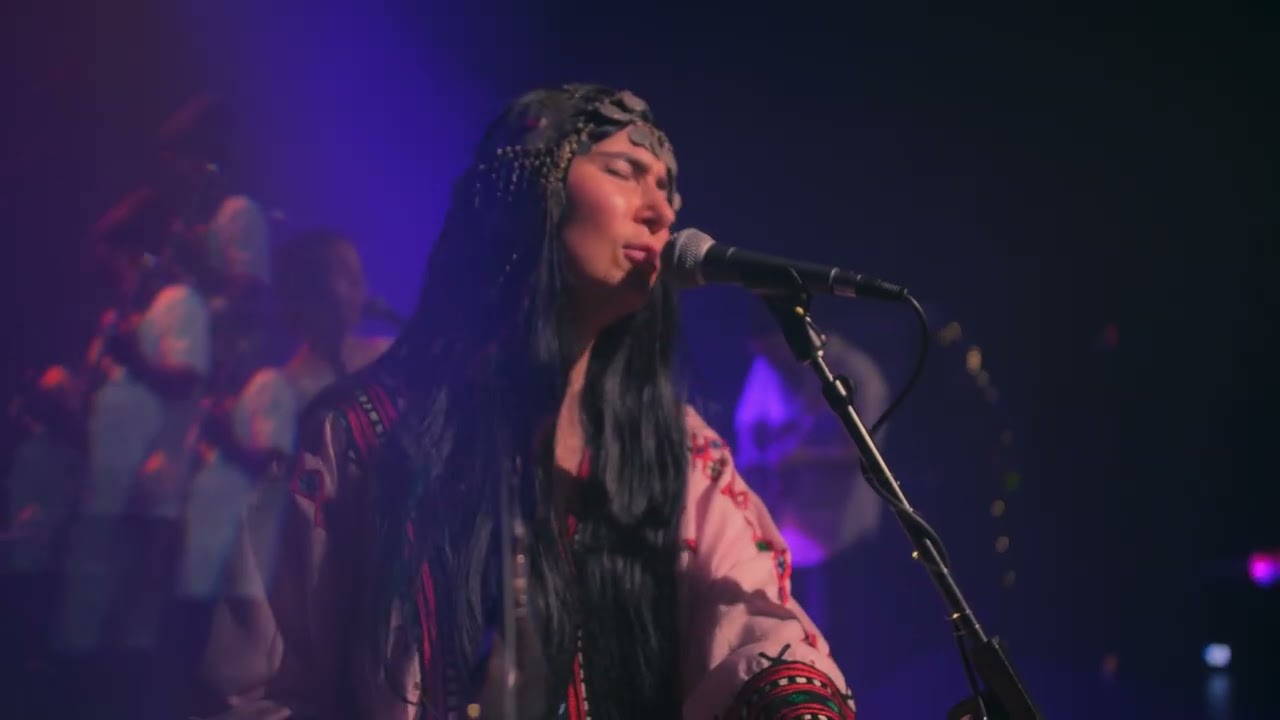
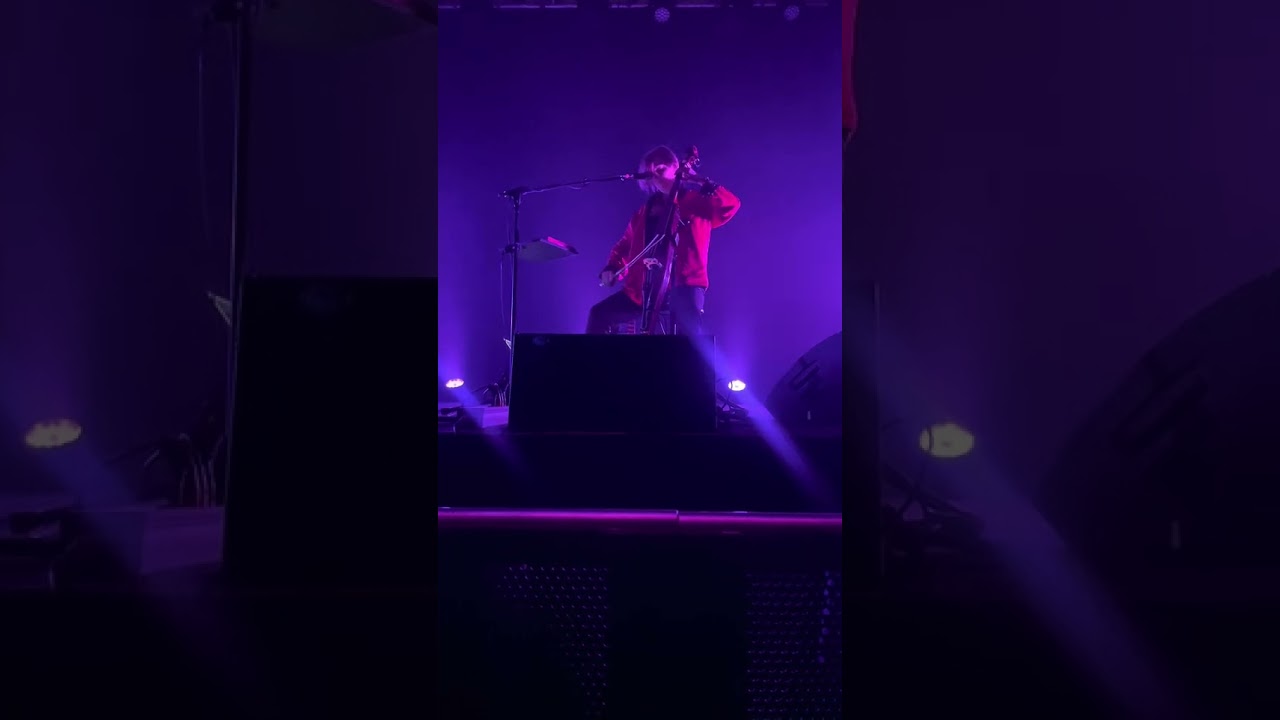
Simrit Kaur performs a live kirtan medley featuring the Grateful Dead's "Dark Star," her original composition "All of Myself," and a return to "Dark Star," accompanied by kora, cello, guitar, bass, and percussion. The performance demonstrates how sacred chant traditions can integrate rock and folk lineages, creating space for introspection and collective presence through repetition, harmonic layering, and improvisation.
What Is Kirtan and Why Does It Matter?
Kirtan is a call-and-response devotional chanting practice rooted in Indian bhakti traditions, where a leader (often accompanied by harmonium) offers a line or phrase and the community responds. Unlike meditation that emphasizes silence, kirtan activates presence through sound, rhythm, and vocal participation. The practice creates what practitioners describe as a "field" of collective energy—where individual consciousness temporarily aligns with group resonance.
Simrit Kaur's approach extends traditional kirtan by drawing from unexpected sources. By opening and closing her performance with the Grateful Dead's "Dark Star"—a psychedelic improvisation with roots in American counterculture—she bridges devotional music with the improvisational ethos of jam bands. This cross-pollination suggests that the emotional and spiritual function of kirtan (sustained focus, rhythmic entrainment, surrender to something larger) doesn't depend on Sanskrit or Hindu origin alone, but on the *structure* of call-and-response and the *quality of presence* musicians and listeners bring.
How Does "Dark Star" Function as a Spiritual Vehicle?
"Dark Star," written by the Grateful Dead, is a song with no fixed lyrics—only the phrase "dark star crashes" repeating like a mantra, nested in long instrumental passages. In its original form, it's an exercise in exploration: the band would enter the composition and follow intuition, never playing it the same way twice. This structure mirrors certain contemplative traditions where a single phrase anchors attention while the mind (or in this case, the ensemble) moves freely within and around it.
In Simrit's interpretation, the phrase becomes a ground tone while harmonium, kora, cello, and percussion build layers of harmonic and rhythmic complexity. The instrumentation matters: the kora (a West African stringed harp) and the cello (a European orchestral instrument) placed alongside the harmonium (a pump-action keyboard from South Asia) create a deliberately multicultural soundscape. No single tradition dominates; instead, the various voices dialogue and support one another. This musical democracy invites listeners to hold multiple lineages at once without privileging one origin story over another.
What Is the Purpose of Repetition in Chant?
Repetition in kirtan and sacred music generally operates on the principle that sustained attention to a phrase or melody quiets the discursive mind. Rather than engaging the intellect's hunger for novelty and narrative progression, repetition asks the nervous system to relax into familiarity. With each cycle, a listener may notice different textures, harmonics, or emotional undertones they didn't catch before—not because the music changed, but because their listening deepened.
The structure of Simrit's performance—returning to "Dark Star" after the original composition—reinforces this principle. By bookending "All of Myself" with the same phrase-space, the performance creates a container. The return signals completion and arrival, a common gesture in both musical and meditative practice. The listener is not left in open-ended exploration, but brought home.
How Does "All of Myself" Expand the Conversation?
"All of Myself," Simrit's original composition, sits at the heart of this performance. Unlike "Dark Star," which trades in abstraction and instrumental color, "All of Myself" carries an explicit emotional or spiritual statement through its title and through Simrit's vocal delivery. The song title suggests themes of surrender, totality, or offering oneself fully—common devotional motifs.
Placing an original composition between two iterations of the Grateful Dead standard signals artistic agency and contemporary relevance. Simrit is not merely preserving or reviving a tradition; she is authoring within it. This gesture mirrors the history of kirtan itself, where every sincere practitioner adds their own voice, language, and musical sensibility to an ancient practice. The performance thus becomes a living demonstration of how spiritual traditions remain vital only through the continuous creative participation of those who practice them.
What Role Do Multiple Instruments Play in Creating Sacred Space?
The ensemble structure—Simrit on vocals and harmonium, Salif Bamakora on kora, Shannon Hayden on cello and guitar, Jared May on bass, and Devon Ashley on drums and percussion—demonstrates that sacred music need not be sparse or minimal. Each instrument occupies its own frequency and rhythmic role, yet the arrangement avoids clutter because each musician listens deeply and leaves space.
The kora brings a gently percussive, harp-like voice that evokes African string traditions. The cello adds sustained harmonic depth and can shift between accompaniment and soloistic statement. The harmonium anchors the melodic and harmonic structure, as it does in traditional kirtan. Bass and drums establish temporal stability—the heartbeat that allows everything else to float or soar. Guitar can bridge idioms, offering both rhythmic support and textural variation.
Together, these instruments create what some musicians and listeners describe as a "sacred geometry" of sound: multiple independent voices following their own logic while serving a shared intention. This mirrors how communities or families function ideally—individual autonomy nested within collective purpose. Listeners may find themselves moved not only by the music's literal content, but by witnessing coordination without coercion, difference without hierarchy.
Why Document a Live Performance?
The official video release of this live performance—credited to cinematography by Akhi Lavoie and editing by the same—signals that the experience is meant for broadcast and asynchronous sharing. A listener need not attend a concert venue; the recording brings the performance into homes, phones, and headphones globally. This democratization of access is particularly relevant for kirtan, a tradition historically shared in person within sangha (spiritual community).
Yet a video or audio recording of kirtan raises an interesting tension: the practice traditionally emphasizes *presence* and *participation*. A listener watching alone at home cannot call and respond in real time; cannot feel the physical vibration of the group's voice; cannot experience the spontaneous shifts an ensemble makes when it senses a room's energy. The recorded version offers something else—a model, a transmission of intention, an invitation to practice along. Many contemporary kirtan practitioners release recordings precisely because they recognize that not everyone can gather in person, and that a sincere recording can serve as a teaching tool and a catalyst for home practice.
Where to go from here
If this performance resonates, consider exploring kirtan in a few directions. First, seek out live kirtan events in your area—temples, yoga studios, and spiritual centers often host weekly or monthly gatherings where you can experience the call-and-response directly and discover how your own voice contributes to collective singing. Second, familiarize yourself with the instrumental traditions represented here: listen to Grateful Dead improvisations and jam-band musicianship to understand how "Dark Star" functions in its original context; explore West African kora music to hear the root tradition Salif Bamakora carries; listen to classical cello and contemporary cello-based sacred music to grasp the range Shannon Hayden can access. Third, consider that musical and spiritual traditions don't require you to choose only one lineage—Simrit's ensemble demonstrates that sincere practice and listening allow multiple ways of knowing to coexist and enrich one another. Finally, if you practice music yourself, experiment with how repetition, spaciousness, and collective attention might transform what you create.