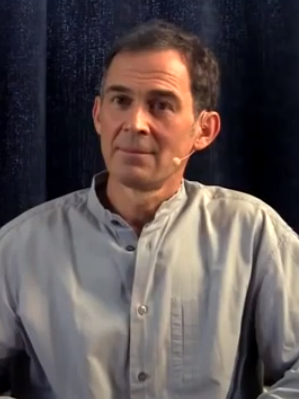
Finding Peace Within: The Journey to Our True Being
Rupert Spira's assertion that "the only place to look for peace is where it is to be found — in our own being" invites us to turn our gaze inward, suggesting that the quest for tranquility is not a pursuit external to ourselves but rather an exploration of our inner landscape. In a world often characterized by chaos and distraction, this perspective holds profound significance. It challenges us to reconsider where we seek solace and fulfillment, urging us to recognize that true peace resides within our own essence.
This invitation to introspection is not merely philosophical; it is a call to action. In a society that frequently equates happiness with external achievements or possessions, Spira's words remind us of the deeper truth that peace is not contingent upon circumstances or material success. Instead, it is an inherent quality of our being, waiting to be uncovered through awareness and contemplation. This understanding can transform our approach to life, shifting our focus from the transient to the eternal, from the external to the internal.
The image / the metaphor
The imagery in Spira's quote is striking in its simplicity yet profound in its implications. The phrase "look for peace" evokes a sense of searching, a quest that many undertake throughout their lives. The verb "look" suggests an active engagement, a movement towards something that is perceived as separate from oneself. However, the subsequent phrase "where it is to be found — in our own being" reveals a deeper truth: that the peace we seek is not an object to be acquired but a state of awareness to be realized. This subtle shift in understanding transforms our search from an outward journey into an inward exploration.
In the speaker's tradition
Rupert Spira's teachings are rooted in the non-dual tradition, which emphasizes the interconnectedness of all existence and the realization of the self as one with the universe. Concepts such as "sunyata" (emptiness) and "fana" (annihilation of the self) resonate deeply within this framework, suggesting that true peace arises when we dissolve the boundaries of the ego and recognize our unity with all that is. In this context, peace is not merely the absence of conflict but the presence of a profound understanding of our shared existence.
In his work, Spira often references the idea of "presence," which aligns closely with the teachings of Advaita Vedanta and other non-dual philosophies. The recognition of our true nature as awareness itself is echoed in texts such as the Upanishads, where the essence of being is described as the ultimate reality. This understanding invites us to transcend the dualities of life, allowing us to experience peace as an intrinsic aspect of our being rather than a fleeting emotion dependent on external factors.
Living the teaching
Consider a modern scenario where the pressures of daily life can often feel overwhelming. Imagine a person navigating the demands of work, family, and social obligations, constantly seeking peace through external validation or achievement. In this context, Spira's teaching serves as a gentle reminder that true peace is not found in the accolades or the approval of others but in the quiet moments of self-reflection and connection with one's inner self. By taking time to pause and cultivate awareness, this individual can begin to experience the tranquility that arises from within, transforming their relationship with stress and expectation.
In a different application, think about a challenging moment in a relationship, where misunderstandings and conflicts arise. In such instances, the tendency is often to seek resolution through external means—discussions, compromises, or even avoidance. However, by embodying Spira's teaching, one can approach the situation with a sense of inner peace, recognizing that the resolution lies not in changing the other person but in connecting with one's own being. This shift in perspective can foster compassion and understanding, allowing for deeper connections and a more harmonious interaction.
A reflection
As we contemplate Spira's profound insight, we are invited to reflect on our own lives: Where do we seek peace, and how often do we turn inward to discover it? This question encourages us to examine our habits and beliefs about happiness and fulfillment. In a world that often promotes external solutions, how might we cultivate a deeper awareness of our own being as the source of lasting peace? This inquiry invites us to explore the richness of our inner landscape, revealing the tranquility that has always been present, waiting for us to acknowledge it.



Join the BrightStar Community
Stay connected with daily inspiration, event announcements, and community wisdom