What Does It Mean to Walk the Tightrope in Life?
The central image of "Tightrope Walker" is not primarily about literal danger or acrobatic skill, but rather the psychological and spiritual posture required to move through contradiction. A tightrope walker cannot lean entirely left or right—they must find a center, a line of balance, between opposing forces. Ayla Nereo uses this metaphor to describe the human condition: we are perpetually asked to hold opposites simultaneously. We are "timid as a raindrop" yet called to be "bold as the iceberg." We seek comfort and safety—"goose-down comfort, blackbear hideaway"—yet must also venture out, risking the vulnerability of the open world.
This is not a song about overcoming fear by defeating it. Rather, it suggests that fear and courage are not opposites to be conquered but complementary forces to be balanced. The tightrope walker does not eliminate fear; they learn to move with it, to let it inform their footsteps without paralyzing them. In the context of conscious living, this speaks to the maturity required to act in the world while remaining aware of genuine limitation and uncertainty.
How Do Natural Metaphors Express the Paradox of Change?
Throughout the song, Nereo employs vivid natural imagery—pinecones, elderberries, riverbeds, ice, thorns, goose-down, blackbears, lightning, bone, footprints, and brightenings. These are not random poetic flourishes; they evoke the actual texture of transformation in the natural world. A pinecone ricochets when it falls; it doesn't take a straight line. A raindrop is both fragile and, in aggregate, capable of reshaping earth itself. An iceberg appears solid yet is in constant, slow motion toward dissolution.
The song observes that change is not smooth or predictable. It is "ricochet"—bouncing, indirect, finding its path through obstacles. The "mudslide" and "riverside" imagery suggests that water (often a metaphor for the soul or consciousness) moves by gravity and terrain, not by will alone. The tightrope walker must therefore develop a relationship with this ricocheting, mudslide quality of existence rather than trying to impose straight lines on curved reality.
Natural metaphors also ground the song in the body. Thorns, bones, ribs, breath, bandages—these are not abstract philosophical concepts but lived sensations. The song does not ask us to think about contradiction; it asks us to feel it, to inhabit it. A thorn "crushes" the blackberry as the berry ripens; the contradiction is physical, nutritive, generative.
What Is the Role of the Breath in Tightrope Walking?
The song returns repeatedly to breath: "in breath outside, going on a limb and tearing of the bandage," "inbreath outside / outbreath inside." This is not metaphorical flourish alone. In contemplative and somatic traditions, breath is the bridge between the autonomous nervous system and conscious will. The breath is also the primary exchange between self and world—we literally take in what is outside and expel what is inside in a continuous cycle.
The reversal of "inbreath outside / outbreath inside" is particularly significant. It suggests that the boundary between inside and outside, self and world, is not fixed. As we take in the outside world through breath and perception, we internalize it; as we expel our inner experience into the world, we shape the outer. The tightrope walker, balanced on their line, cannot afford the luxury of thinking they are separate from their environment. They must breathe the world and the world must breathe them.
This speaks to a core spiritual insight: fearlessness does not come from building walls between self and threat, but from recognizing the permeability of those walls, from breathing in and with the very uncertainty we fear.
What Does It Mean to "Tear the Bandage"?
The song explicitly mentions "tearing of the bandage" in the context of "uncovering fearlessness." A bandage is protective but also limiting—it prevents healing, isolates the wound from air and connection. The image suggests that our protective mechanisms, while once necessary, eventually become prisons. We wrap ourselves in comfort, safety, habit, and familiar narrative about who we are and what we can do.
To uncover fearlessness requires removing the bandage, exposing the wound or vulnerability beneath. This is not recklessness or avoidance of genuine danger. Rather, it is the willingness to acknowledge that we are not invulnerable and never will be, and that this acknowledgment is liberating rather than paralyzing. The tightrope walker is fearless not because they believe they won't fall but because they've accepted falling as a real possibility and decided to walk anyway.
How Do Riddles and Paradox Resolve Into Wholeness?
The song culminates with the image of "bone-bent riddle be met with a riddle be found." This is intentionally cryptic language. A riddle is a puzzle that initially seems contradictory or unsolvable. A bone-bent riddle suggests that the contradiction is not merely intellectual but somatic, woven into the body itself—into how we are structured at the deepest level.
The phrase suggests that when one riddle (one paradox, one contradiction) encounters another riddle, resolution occurs not through logic but through meeting, encounter, collision. Two contradictory truths do not cancel each other out; they meet in the middle, like the tightrope itself, and generate a third thing—a way of being that contains both.
This echoes contemplative traditions that recognize the limits of the discursive mind. Zen koans work similarly: they are paradoxes offered not to be solved but to be inhabited, sat with, until the conceptual mind gives way to a more direct knowing. The tightrope walker similarly cannot think their way across the line—they must learn to be it, to embody the balance.
What Is the Relationship Between Comfort and Courage in Conscious Living?
The song does not condemn comfort. "Goose-down comfort, blackbear hideaway"—these are not rejected but acknowledged as real human needs and, at times, necessary refuges. But the song frames these not as final destinations but as rest stops. "Going out for winter"—the same shelter that sustains life through harsh seasons is also a place one must eventually leave.
This is a mature view. Spiritual bypassing often demands that practitioners reject comfort, safety, and normal human care in favor of some imagined enlightened state. Nereo suggests instead that comfort is real and sometimes necessary, but that growth requires the willingness to leave it temporarily, to venture onto the limb, to risk imbalance in the service of movement and transformation.
The "tightrope walker" is not someone who has eliminated need for shelter or comfort. They are someone who has learned to balance self-care with self-challenge, to respect their vulnerability while not being tyrannized by it.
How Does the Song's Form Mirror Its Content?
The structure of "Tightrope Walker" itself enacts the balance it describes. The lyrics are not linear narrative but recursive, cyclical—motifs return and recombine: "ricochet pinecone," "tightrope walker," "inbreath outside." There is no climax or resolution in the conventional sense. Instead, the song spirals, approaches the center from different angles, like a meditation walking toward a truth that cannot be stated directly but only circled.
The language itself is alliterative and phonetically dense—"bone-bent," "blackbear," "brightening," "rib-bent whistler." This sonic richness slows the listener down, makes them attentive to how the words feel in the mouth and ear, not just their semantic content. It requires breath control to sing or speak, making the listener embody the breath-focus the lyrics reference.
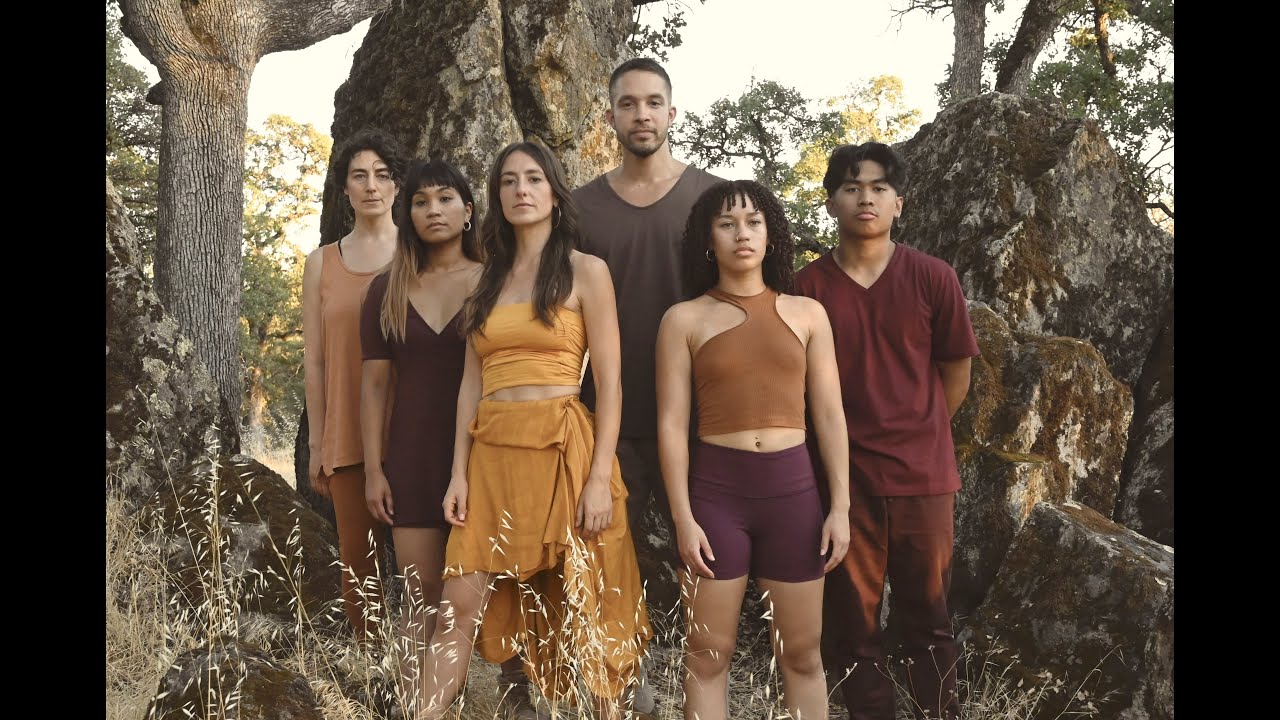
The music video, directed by Nereo and Adam Worth, visually performs similar work. Cinematography of natural elements, the body in motion, light and shadow—these externalize the internal balance the song explores. The viewer is not told what the song means; they are shown a body and a world in dynamic, vulnerable relationship.
Where to go from here
To work with "Tightrope Walker" as a contemplative resource rather than merely a song to listen to passively, consider: Where in your own life are you asked to balance opposites without resolving them? What "bandages" of protection might be limiting your capacity for genuine encounter? What does it feel like to practice breathing the world in and expelling your inner world out, without trying to control or separate the flow? A tightrope walker practices balance physically; you might practice it by naming the contradictions you're holding (timidity and boldness, comfort and risk, vulnerability and resilience) and noticing where balance lives—not at either extreme but on the line itself.
Ayla Nereo's full catalog of music and teaching, available at aylanereo.com, extends this work into rhythm, song, and collective practice. "Tightrope Walker" is a gateway into a larger body of work exploring the intersection of embodiment, spirit, and the courage required to live with genuine authenticity in an uncertain world.
]]>