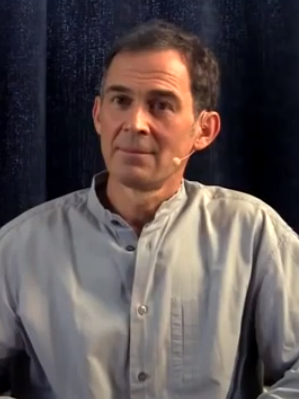
The Essence of Awareness: A Journey Within
Rupert Spira's profound assertion, "Whatever appears, it appears in me — pure awareness," invites us to explore the nature of our consciousness and the relationship between our inner experience and the external world. This statement serves as a reminder that all phenomena, whether thoughts, emotions, or sensory experiences, arise within the vast expanse of our awareness. Understanding this concept is crucial, as it shifts our perspective from identifying with transient experiences to recognizing the unchanging essence of awareness that underlies them.
In a world often dominated by distractions and external validations, Spira's words beckon us to return to the source of our being. This invitation to recognize awareness as the fundamental ground of our existence is not merely philosophical; it has profound implications for how we navigate our lives. By embracing the idea that all appearances are contained within our awareness, we can cultivate a deeper sense of peace and clarity, allowing us to respond to life's challenges with greater equanimity and insight.
The image / the metaphor
The imagery in Spira's quote evokes a sense of spaciousness and depth. The phrase "appears in me" suggests a container-like quality to awareness, where all experiences are held within a boundless space. This metaphor of awareness as a vast ocean, with thoughts and sensations as waves that rise and fall, captures the essence of non-dual understanding. The verbs chosen—"appears" and "awareness"—highlight the transient nature of our experiences and the enduring quality of the observer, inviting us to distinguish between the fleeting and the eternal.
Diving deeper into this metaphor, we can see that awareness is not merely a passive observer but an active participant in the unfolding of life. It is the canvas upon which the colors of our experiences are painted, yet it remains untouched by the brushstrokes of joy, sorrow, or mundane existence. This understanding encourages us to cultivate a relationship with our awareness, recognizing it as a dynamic force that shapes our perception and experience of reality. By acknowledging that everything we encounter is an expression of this pure awareness, we begin to dissolve the barriers that separate us from the world around us.
In the speaker's tradition
Rupert Spira's teachings are deeply rooted in the non-dual tradition, which emphasizes the interconnectedness of all existence and the illusion of separation. Concepts such as *sunyata* (emptiness) and *fana* (annihilation of the self) resonate with Spira's assertion, as they point to the realization that our individual identities are mere constructs arising within the vastness of awareness. This perspective invites us to transcend the ego's limitations and embrace a more expansive understanding of our true nature, which is inherently unified with all that is.
Living the teaching
Consider a modern scenario where this teaching can be applied: imagine navigating a particularly stressful day at work. As deadlines loom and tensions rise, it is easy to become engulfed by the chaos around us. However, by recalling Spira's insight that "whatever appears, it appears in me," we can pause and shift our focus inward. This shift allows us to recognize that the stress and urgency are not definitive aspects of our identity but rather temporary waves passing through the ocean of our awareness. By grounding ourselves in this understanding, we can respond to challenges with a sense of calm and clarity, rather than being swept away by the currents of external circumstances.
In the context of relationships, this teaching can also illuminate our interactions with others. When faced with conflict or misunderstanding, we often become entangled in our emotional responses, identifying strongly with our feelings of hurt or frustration. However, by remembering that these emotions are appearances within our awareness, we can cultivate a sense of detachment that allows for more compassionate engagement. This perspective encourages us to listen deeply and respond thoughtfully, fostering a space for healing and connection rather than division.
A reflection
As we contemplate the depth of Spira's quote, we are invited to ask ourselves: "What does it mean for me to recognize that all experiences arise within my awareness?" This question encourages a profound exploration of our relationship with our thoughts, emotions, and the world around us. By reflecting on this inquiry, we can begin to unravel the layers of identification that bind us, allowing for a more expansive and liberated experience of life.



Join the BrightStar Community
Stay connected with daily inspiration, event announcements, and community wisdom