Awareness Beyond Thought: The Essence of 'I'
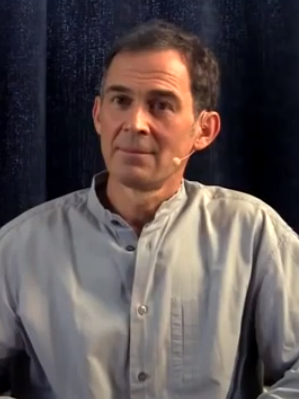
Rupert Spira's assertion, "This 'I' you sense is awareness, not a thought," invites us to explore the profound distinction between our sense of self and the mental constructs that often define it. In a world where identity is frequently equated with thoughts, beliefs, and experiences, this statement serves as a gentle reminder of our deeper essence. Understanding this distinction is not merely an intellectual exercise; it holds the potential to transform our relationship with ourselves and the world around us.
At the heart of Spira's teaching lies an invitation to delve into the nature of consciousness itself. The 'I' that we often cling to as our identity is not a static entity but rather a fluid awareness that transcends the confines of thought. This realization can lead to a profound sense of liberation, as we begin to recognize that our true nature is not defined by the transient thoughts that pass through our minds but by the awareness that observes them. This exploration is essential for anyone seeking a deeper understanding of themselves and their place in the universe.
The image / the metaphor
The imagery in Spira's quote evokes a sense of clarity and depth, suggesting that the 'I' we often identify with is merely a surface layer of our being. The verb "sense" implies an intuitive recognition, a feeling that goes beyond mere cognition. This awareness is not a thought that can be grasped or articulated; rather, it is an experiential understanding that resides in the core of our being. The distinction between awareness and thought is crucial, as it highlights the ephemeral nature of thoughts compared to the enduring quality of awareness.
Diving deeper into this metaphor, we can envision awareness as an expansive ocean, while thoughts are akin to the waves that rise and fall upon its surface. The waves may capture our attention, drawing us into their temporary forms, yet they are not the essence of the ocean itself. This imagery invites us to recognize that while thoughts may come and go, the awareness that perceives them remains constant and unchanging. By anchoring ourselves in this awareness, we can cultivate a sense of peace and stability amidst the turbulence of our thoughts.
In the speaker's tradition
Rupert Spira's teachings are rooted in the non-dual tradition, which emphasizes the interconnectedness of all existence and the illusion of separation. Concepts such as *advaita* (non-duality) and *sunyata* (emptiness) resonate deeply with his assertion. In this context, the 'I' is understood not as a separate entity but as an expression of the universal consciousness that permeates all life. This perspective invites us to dissolve the boundaries of our individual identities and recognize our shared essence with all beings.
In the *Upanishads*, ancient texts that explore the nature of reality and self, we find echoes of Spira's insight. The phrase "Tat Tvam Asi," meaning "That Thou Art," encapsulates the essence of non-duality, suggesting that our individual consciousness is not separate from the greater consciousness of the universe. This profound realization aligns with Spira's teaching, urging us to look beyond our thoughts and recognize the awareness that unites us all. Such texts serve as a foundation for understanding the depth of our true nature and the interconnectedness of existence.
Living the teaching
Consider a modern scenario where the teaching of awareness versus thought becomes particularly relevant: a moment of anxiety before a significant life event, such as a job interview. In this situation, the mind may flood with thoughts of self-doubt, fear of failure, and the pressure to perform. By recognizing that these thoughts do not define the 'I' but are merely passing clouds in the vast sky of awareness, one can cultivate a sense of calm and presence. This shift in perspective allows for a more grounded approach, enabling the individual to engage with the experience from a place of clarity rather than fear.
Another application of this teaching can be found in interpersonal relationships. When conflicts arise, it is easy to become entangled in the narratives and judgments that our minds create. By remembering that our true identity is rooted in awareness, we can approach these situations with greater compassion and understanding. Instead of reacting from a place of hurt or defensiveness, we can respond with a sense of openness, recognizing that the essence of both ourselves and others is the same awareness. This practice not only fosters healthier relationships but also deepens our connection to the shared human experience.
A reflection
As we contemplate Spira's profound statement, we are invited to reflect on the nature of our own identity. What does it mean to you to distinguish between the awareness that you are and the thoughts that you experience? In moments of stillness, consider how this understanding might shift your perception of yourself and your interactions with the world. Allow this contemplation to guide you toward a deeper recognition of your true essence, beyond the confines of thought.



Join the BrightStar Community
Stay connected with daily inspiration, event announcements, and community wisdom