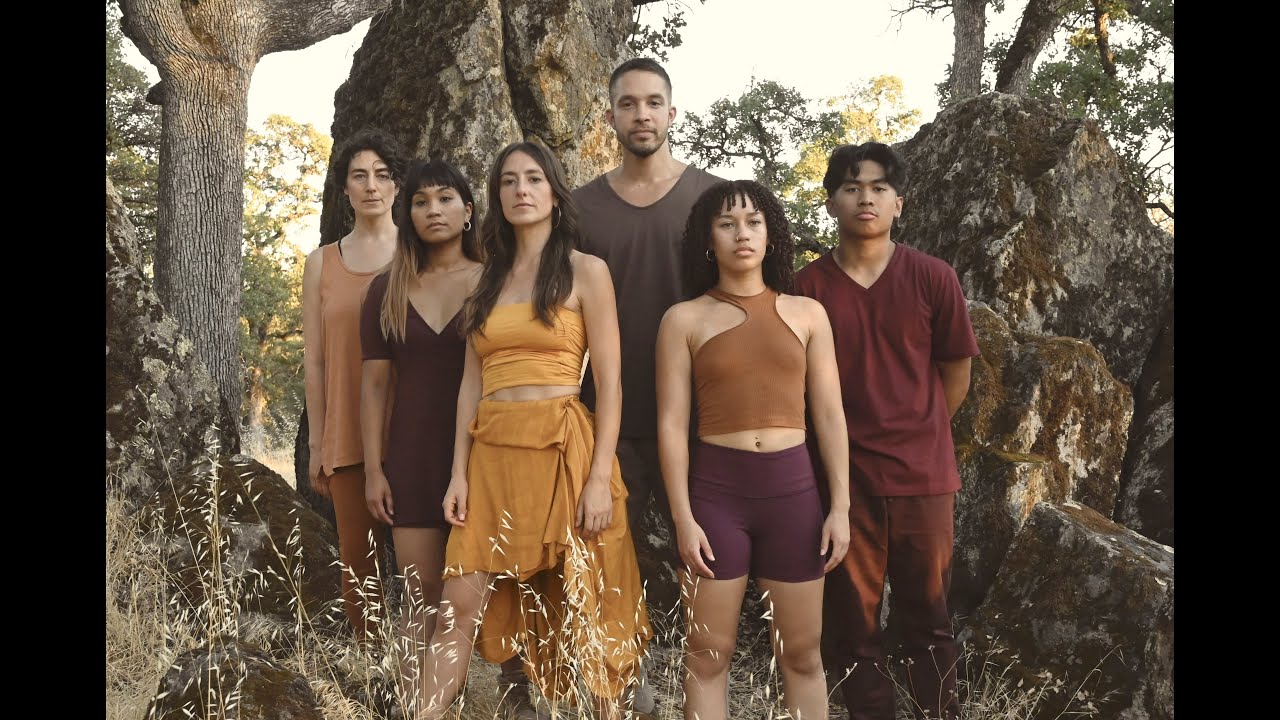
Ayla Nereo's "Show Yourself (The Human Experience remix)" is a five-minute vocal meditation that explores the paradox of self-expression: we show ourselves not for external validation, but to deepen our own self-knowledge. The song weaves themes of authenticity, embodied presence, and the distinction between performing for others versus revealing ourselves to ourselves, grounded in the recognition that the Earth itself is our shared body and witness.
What Does It Mean to "Show Yourself"?
The central refrain of Nereo's composition—"I do not show this skin for you / I show myself to know myself"—establishes a fundamental reorientation of why we reveal ourselves at all. Rather than framing self-expression as a transaction with an audience, the song proposes that exposure is primarily an act of self-discovery. When we show up authentically, we are not performing for validation or judgment; we are engaging in an act of witnessing our own existence. This distinction matters because it shifts the burden of authenticity from external approval to internal recognition.
The phrase recurs throughout the piece with variations—"I show for the Earth which I came, my prayers for you to do the same"—suggesting that authentic self-expression is both a personal practice and an invitation to others. There is no demand in this framing, only a modeling: if you see me showing myself to know myself, perhaps you will do the same.
Embodiment and the Recognition of Earth as Body
Nereo's imagery repeatedly situates the human form within a larger ecological and spiritual context. Lines such as "the Earth one being your body" and "your servant in highness the Earth One being your body Queen" propose that the boundary between individual body and planetary body is permeable or even illusory. This is not mere metaphor; it reflects a contemplative understanding in which the body is not separate from the world but continuous with it.
This recognition has practical implications for how we understand self-expression. If the Earth is our body, then showing ourselves is simultaneously an act of showing the Earth. Our authenticity is not merely personal; it participates in a larger revelation. The song invites listeners to feel the interconnection between personal vulnerability and planetary presence.
What Is the Paradox of Authenticity?
A subtle tension underlies the song: if we show ourselves to know ourselves, not for others, why does the refrain repeatedly say "my prayers for you to do the same"? This is not contradiction but deepening. The logic is: by revealing ourselves authentically, we create permission and invitation for others to do the same. Authentic self-expression is thus both radically self-directed and deeply relational. We do not perform for others, yet our showing up creates the conditions for others to show up.
The lyrics also acknowledge difficulty in this process. Phrases like "when doubled and breaking all wide and crazy" and "delicate thrashing" suggest that authenticity is not a polished or comfortable state. It involves being unmade, disheveled, broken open. The task, as Nereo sings, is urgent: "the task is at hand and not a moment too soon." There is an implicit suggestion that delay or postponement of authentic self-showing carries a cost.
The Role of Voice in Self-Knowledge
As a vocalist and teacher of voice, Nereo uses the medium of song itself as part of the message. The repetition of the central refrain, the layering of her voice, and the emphasis on sound as a carrier of meaning all point to voice as a primary tool for self-discovery. In her accompanying courses ("Meeting the Muse" and "Empowered Voice"), Nereo teaches that vocal expression is not primarily about pleasing the ear of a listener but about unlocking access to one's own knowing.
When we sing, particularly when we sing the same phrase repeatedly as Nereo does here, we are not just producing sound—we are communing with our own resonance. The body becomes an instrument of self-inquiry. Each repetition allows deeper layers of the phrase to reveal themselves.
How Does the "Human Experience Remix" Frame This Meaning?
The subtitle "The Human Experience remix" suggests that this version of the song emphasizes the universal, shared dimension of what Nereo is expressing. To be human is to face the question of authenticity, to wrestle with the tension between showing up and holding back, to navigate the delicate balance between self-knowledge and connection. By framing the song as a "human experience," Nereo positions her individual voice as a carrier of something collective.
The musical arrangement—described as a "fusion of ethereal sounds and heartfelt lyrics"—supports this. The production does not strip down to a single voice but rather surrounds it with texture and resonance, mirroring the idea that individual authenticity exists within (and is supported by) a larger web of being.
What Is the Spiritual Practice Embedded in This Song?
Heard as a practice rather than merely as music, "Show Yourself" functions as a mantra-like invocation. The repetition of key phrases—"I do not show this skin for you," "I show myself to know myself"—creates a template for internal reorientation. Each time the listener hears or sings along, they are rehearsing a particular relationship to their own presence: one based on self-witnessing rather than external judgment.
This aligns with contemplative traditions in which repetition is used to gradually shift consciousness. The song is not asking the listener to believe something intellectually; it is asking them to embody a different relationship to showing up, through the vehicle of sound and listening.
Where to Go From Here
For listeners drawn to these themes, Ayla Nereo offers structured pathways for deepening: "Meeting the Muse" (a free five-day course) introduces foundational voice-opening practices, while "Empowered Voice" provides a more comprehensive system for understanding the connection between vocal expression and self-knowledge. Her music is available across all major platforms (Spotify, Apple Music, SoundCloud), and her website (aylanereo.com) offers additional teachings on the relationship between voice, creativity, and authentic presence. The implicit invitation of "Show Yourself" is not to listen passively but to practice: to find your own voice, speak or sing the truth of your own showing, and in doing so, both know yourself more deeply and create permission for others to do the same.