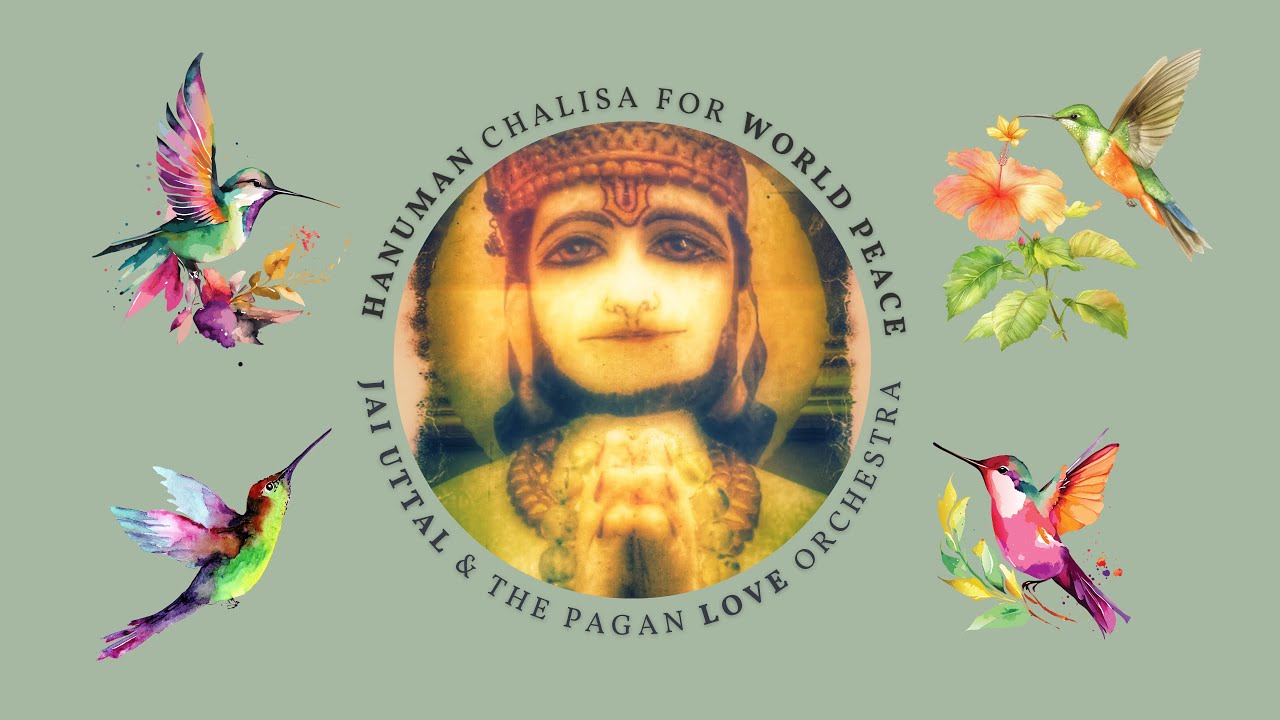
Jai Uttal describes music—specifically kirtan and mantra practice—as the primary link between the individual soul and the divine. From his teenage years, he discovered that the rhythmic and melodic repetition of sacred sound creates a vessel for the heart to commune with God and with the souls of others. Mantras, in his understanding, are messages we send sailing toward the divine, and through the guidance of his guru Neem Karoli Baba, he learned that simple utterances like "ROM" unlock infinite possibility. Kirtan itself is an interactive practice where each participant brings their being into the experience, feeding collective energy and intention from heart to heart.
How Did Music Become Jai Uttal's Spiritual Path?
From the very beginning, there was a recognition—what Uttal calls "a sense from very early on"—that music was the link to my soul. This was not a learned belief but an intuitive knowing. When he first encountered kirtan as a teenager, he felt the power of rhythmic and melodic repetition of mantras in a way that was, as he describes it, completely fascinating. What drew him in was not the complexity of the music itself, but the rhythmic and melodic repetition of these mantras and the energy they carried. The practice called to something deeper within him—a recognition that music was not mere entertainment or even art, but a technology of the soul.
This early attraction would shape his life's work. Rather than dismiss kirtan as a cultural curiosity, Uttal committed himself to understanding how sacred sound functions as a bridge between the individual consciousness and something vastly larger. The repetition itself became key: the mantra was not meant to surprise or intellectually challenge, but to attune the mind and heart through sustained, rhythmic invocation.
What Is the Mantra as a Vessel?
Central to Uttal's practice is a metaphor that clarifies how mantras work: I often equate the mantras as like a vessel you know we're putting our heart into this vessel these mantras and they're sailing into the divine ocean like a message in a bottle that we pray will be picked up by our beloved on the other Shore. This image is not poetic ornamentation—it is a functional teaching about what happens when we chant.
The mantra itself is the container. Our effort, intention, and devotion are what we place inside that container. The sound then carries this offering across an invisible ocean toward the divine. The beautiful uncertainty in this metaphor—a message in a bottle that we pray will be picked up—acknowledges both the sincere hope of the practice and the mystery of whether or how the divine receives our call. It is an act of faith, not certainty. Yet Uttal emphasizes that the vessels themselves—the mantras—have so much so much energy, suggesting that the sound forms carry their own inherent potency independent of our belief in them.
How Does Meeting a Guru Change One's Relationship to Practice?
Uttal describes a pivotal turning point: the place that I touched when I first started singing while it felt full and whole it also felt desperately longing for divine connection allowing myself to sit in that place didn't really fully happen until I met my guru in India neem Karoli Baba. He was singing, sensing the divine, but not fully inhabited by that longing. The presence of a realized teacher—someone who embodies the union he was seeking—changed something fundamental.
Neem Karoli Baba gave him a direct instruction: say ROM. ROM, he explained, is one of the divine mantras it's one of the names of God and he said if you say ROM the impossible becomes possible all things are possible with that simple word. This was not an abstract teaching. It was a permission, a key, an invocation of infinite possibility through one word. The guru's confidence in the power of ROM gave Uttal permission to trust not just the mantra, but his own capacity to channel divine force. So I took that to heart—meaning he made it the center of his practice, his devotion, his life.
What Is Kirtan as Collective Practice?
Uttal makes clear that kirtan is fundamentally different from a solo spiritual practice or a performance: since kirtan is interactive each person who comes brings their soul and their being to the experience. This is not a passive listening situation. The kirtan event is a meeting ground where multiple consciousnesses gather with the intention of approaching the divine together.
For this to work, everyone must find that place in themselves where they can express and explore and share their heart with the people around them and that creates their own experience. The responsibility is not just on the leader (the kirtan artist) but on each participant. Each person must locate their own capacity for heart-expression. This may happen through voice, movement, tears, silence, or simply the quality of attention they bring. There is no single correct way to participate; rather, everyone discovers their authentic entry point.
How Does Collective Energy Amplify Through Kirtan?
When all participants bring honesty and depth to their intention, something multiplicative occurs: we all feed each other our passion goes to the next person to the next person to the next person. This is not metaphorical. Uttal is describing a real transmission of energy and resonance through the group field. One person's sincerity ignites the next person's openness, which intensifies the first person's vulnerability, creating a feedback loop of collective heart-opening.
The mantras become more powerful because they are sung together. The vessel is no longer a single voice calling across the divine ocean, but many vessels launching from the same shore in concert. The energy is pooled, amplified, and redirected toward the divine encounter. This explains why kirtan practitioners often report that group singing feels fundamentally different from solo practice—the collective intention creates a more powerful resonance field.
What Does It Mean to Touch Souls Through Music?
The ultimate aim of Uttal's teaching is both individual and relational: music brings us closer to God bring us to bring us closer to our own souls to bring us closer to them Souls around us and to touch their feet. The movement is triple: inward (to our own soul), upward (to God), and outward (to the souls of others). These are not separate directions—they are one unified intention expressed through sound.
To touch their feet is to recognize the divine presence in the other, to bow before the consciousness that inhabits each being. Kirtan, in this sense, is an act of reverence for the souls you are gathered with, a mutual acknowledgment of each person's divine nature. The music becomes the language by which this reverence is expressed and felt.
Where to Go from Here
Jai Uttal's teaching invites several directions of exploration:
- Learn a kirtan or mantra practice. Choose a mantra that resonates—whether ROM (as Uttal teaches), OM, or another sacred sound—and practice daily repetition. Notice over weeks and months how the rhythm begins to open your heart and shift your consciousness.
- Attend a live kirtan gathering. Experience directly the difference between solo practice and collective singing. Notice how the energy of others' voices affects your own capacity to open and surrender.
- Explore the concept of the guru. If Uttal's encounter with Neem Karoli Baba intrigues you, read teachings from and about this lineage. Investigate what the guru-student relationship offers that self-directed practice may not.
- Experiment with music as a spiritual vessel. What music (sacred or secular) draws you toward transcendence? How might you consciously infuse your listening or singing with the intention of sending your heart toward the divine?
- Practice heart-sharing in group settings. Whether in kirtan, meditation circles, or prayer groups, learn to locate and express your authentic voice. Notice how vulnerability creates permission for others to open as well.