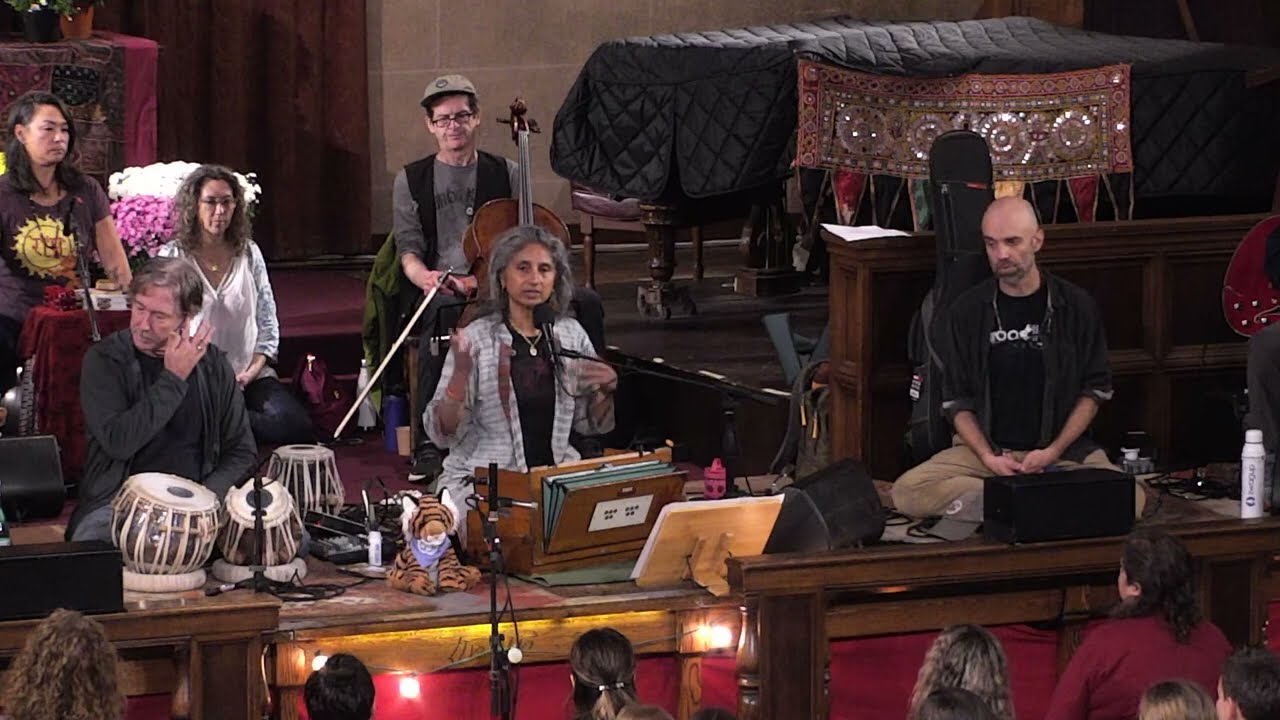
"Stars" is a lyric meditation that weaves together themes of geographical and temporal vastness, spiritual surrender, and creative becoming. Through imagery of frozen waters, stormy winds, and the dark moon, the song invites listeners into a practice of grace and devotion—of learning to "just be as you are" while releasing attachment to outcome. The work explores how surrender and letting go are not passivity but active pathways to aliveness, particularly within creative and spiritual practice.
What Does It Mean to Be Lost in Stars?
The central refrain—"I'm lost in your stars / by the light of the dark moon"—establishes the song's core paradox. Being "lost" is typically framed as confusion or disorientation, yet here it functions as a spiritual condition: a releasing of the self's need to navigate or control. The dark moon, astronomically the moment when the moon is invisible between Earth and sun, becomes a symbol for finding light within darkness, for navigating by what cannot be seen. This inverts conventional spiritual imagery; rather than seeking the light of the full moon, the song orients toward grace that emerges through emptiness and absence.
The opening verses establish geographical and temporal scope—"across valleys folding, across waters frozen, / across the time between my dawn and your setting sun"—suggesting that this lostness spans distance and time. It is not a momentary disorientation but a sustained state that bridges difference: valleys and waters, your awakening and another's rest. The song acknowledges separation while simultaneously dissolving it through shared cosmic witness.
How Does Surrender Function as Creative Practice?
A critical instruction emerges early: "oh tongue, set you free, and oh mind let it be." This is not a metaphorical plea but a practical directive. The tongue—instrument of speech, song, and expression—is asked to be freed from constraint. The mind is invited to release its grip on control. This dual liberation appears throughout the work as essential to creative becoming.
The song frames creative work as warfare: "these are the arrows in the battle of becoming." Yet the warrior invoked is not one of conquest but of precision and disarmament. "Make me a warrior hummingbird / disarming"—the hummingbird, smallest and most delicate of birds, hovers in place while moving wings at impossible speeds. To be a "warrior hummingbird" is to combine strength with gentleness, stillness with perpetual motion. The work of becoming, then, is not about pushing forward but about finding the energetic balance point between longing and release.
This balance appears again in: "I aim for the place between all longing and letting be." Creative practice is not about eliminating desire or striving; rather, it is about occupying the middle space where longing (the engine of creation) and surrender (the allowing of emergence) coexist. This teaching aligns with contemplative traditions that distinguish between grasping effort and receptive engagement.
What Role Does the Dark Moon Play in This Practice?
The dark moon recurs throughout the song as an organizing principle. Astronomically invisible, the dark moon has historically been associated with rest, integration, and the clearing away of the old. By "the light of the dark moon," the song suggests that visibility and illumination are not prerequisites for presence or grace. There is light available in darkness—not metaphorically, but as a direct experience available to those attuned to it.
This inverts the spiritual tendency to equate light with truth and darkness with ignorance. The dark moon teaches a different lesson: that not-knowing, emptiness, and the fallow periods of creative and spiritual life are not obstacles to grace but pathways into it. The song's repeated return to this phrase—"by the light of the dark moon / just be as you are, just do as you do"—frames it as both anchor and instruction. In the dark, with no external light to guide you, the only viable practice is radical acceptance of what is.
How Does Letting Go Function Beyond Simple Release?
The refrain "by lettin go, lettin go of everything" appears multiple times, but the song complicates naive interpretations of letting go. Letting go is not about passivity, spiritual bypassing, or the erasure of desire. Instead, it is placed in the context of grace, devotion, and becoming. The sequence reads: "by grace and devotion / by lettin go, lettin go of everything / by breath as it takes you."
The invocation of breath is crucial. Breath is the most fundamental creative force in the human body—it sustains life, powers voice, and serves as the vehicle for song. "By breath as it takes you" suggests that surrender is not the cessation of movement but alignment with the natural rhythm already operating. To let go is not to stop but to align with what is already moving through you. This is particularly relevant for singers and artists; the instruction suggests that creative flow emerges not from willful control but from following the breath's intelligence.
The song also speaks to "speaking honeywine, making wishes star-side." Even within letting go, there is an active capacity for wishing, for invoking, for making meaning. These are not suppressed but are understood as natural expressions of a consciousness that has released attachment to particular outcomes.
What Is the Journey Between Longing and Becoming?
The battle invoked in the song is "the battle of becoming"—not a conflict with an external enemy but the internal struggle of transformation. This becoming is understood as ongoing, never-complete. The song does not promise arrival or resolution but rather invites immersion in the process itself.
Key to this process is the image of the compass: "you be a compass to guide this flight." A compass does not control direction; it orients. In the context of spiritual practice, other people, teachers, and even aspects of one's own deeper wisdom can serve as compasses—not dictating where you go but helping you know which way is true north. The song extends this image: "take me surrendered, fill me to spilling over / the roots of this endless sky." To be "filled to spilling over" is to be so full of presence and aliveness that one overflows—service and expression become natural overflow rather than forced effort.
How Does Individual Voice Connect to Vast Cosmic Scale?
The geographical and temporal scope established in the opening—"across valleys folding, across waters frozen"—is balanced against intimate, immediate instructions: "just be as you are, just do as you do." The song does not ask the listener to transcend their particularness or individual circumstance. Instead, it suggests that within the vastness of cosmic time and space, the most radical and true act is to be exactly as you are, without apology or effort to become otherwise.
This is especially pertinent for singers and artists. The instruction "just be as you are" within a song is an invitation not to perform a version of authenticity but to understand that your particular voice, with all its idiosyncrasies, limitations, and gifts, is already part of the vast pattern. There is nothing to add. There is only the releasing of what obscures your natural expression.
Where to Go from Here
The song itself functions as a practice. Rather than analyzing it intellectually, singers and meditators are invited to use it as a mantra and sonic medicine. The repeated refrain "I'm lost in your stars / by the light of the dark moon" can be returned to again and again, allowing the body to integrate its teaching. The work of becoming—the warrior hummingbird practice—is not complete in a single listening but deepens through repeated return.
Those drawn to this teaching might explore personal practices around the dark moon phase, journaling on the question "What happens when I release control?" or "What wants to move through me when I align with my breath?" The song also invites creative practitioners to examine whether they are creating from longing and control or from the integration of longing and surrender. The pathway forward is not the rejection of desire but its marriage with acceptance.