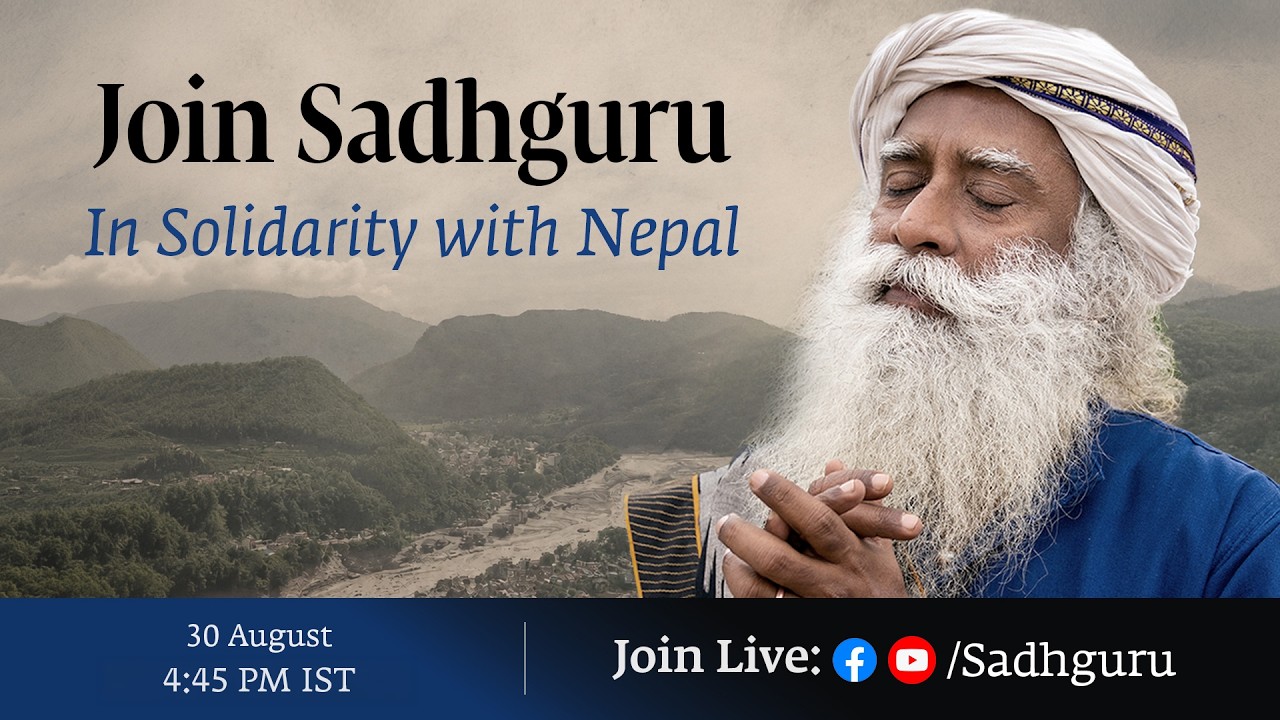
In this video, Sadhguru reveals previously undisclosed details about his second brain surgery—a critical health event that tested his physical body while deepening his understanding of human consciousness and resilience. Rather than treating the surgery as a medical setback, he frames it as an opportunity to explore how the body operates under extreme conditions and what such experiences teach us about the nature of life itself. The talk moves beyond the clinical narrative to examine the spiritual and practical dimensions of facing mortality and physical limitation.
Why Would a Spiritual Teacher Undergo Multiple Brain Surgeries?
Sadhguru has been public about health challenges throughout his life, treating them not as obstacles to his spiritual work but as integral to his understanding of human biology and consciousness. The existence of a second brain surgery—distinct from a prior procedure—indicates that neurological issues have been a recurring part of his embodied experience. Rather than viewing this as a contradiction to his spiritual status, Sadhguru appears to use these medical events as direct experiential data about how consciousness relates to the physical brain and nervous system.
Brain surgery is one of the most invasive medical procedures, requiring the surgeon to access the organ that houses consciousness, memory, and the very mechanisms through which we experience reality. For someone dedicated to understanding the nature of mind and consciousness, undergoing such a procedure creates a unique laboratory of observation. Sadhguru's willingness to discuss "undisclosed details" suggests he is mining these experiences for insights that go beyond standard medical reporting.
What Makes This Surgery Different From the Previous One?
The framing of "undisclosed details" indicates that previous public knowledge about Sadhguru's health may have been incomplete or deliberately withheld for various reasons—perhaps to avoid distraction from his work, to protect privacy during recovery, or because the full significance only became clear in retrospect. By now revealing more details, he is presumably offering a more complete picture of what occurred and what it means.
Without access to the specific medical details, the significance likely lies in how he interprets the event: what the surgery revealed about his body's capacity to heal, what happened during the procedure itself that surprised him, or how the recovery process shifted his understanding of his own limits and capabilities. For a teacher whose work centers on bringing people into direct experience of their own consciousness, a procedure that directly manipulates the brain becomes a powerful teaching opportunity.
How Does Physical Crisis Relate to Spiritual Practice?
Sadhguru's approach to physical illness and medical intervention is notably pragmatic. Rather than treating the body as separate from or subordinate to spiritual practice, he emphasizes that understanding the physical body deeply is part of the spiritual journey. A brain surgery forces direct confrontation with the fact that consciousness operates through a material substrate—the brain—and that disruption to that substrate has real effects on our subjective experience.
This challenges a common assumption that spiritual advancement somehow transcends bodily vulnerability. Instead, Sadhguru's willingness to discuss his surgeries suggests the opposite: that genuine spiritual work includes full acknowledgment and engagement with embodied human reality, including its fragility. The experience of being on an operating table, of having one's brain accessed and operated upon, is an extreme form of surrendering control—of recognizing that there are dimensions of existence that cannot be mastered through willpower or meditation alone.
Rather than contradicting his spiritual teachings, such experiences likely inform them. Someone who has experienced major brain surgery has direct knowledge of what it means to be temporarily unconscious, to have one's thoughts and perceptions fundamentally altered, to lose agency over one's own body. These are not abstract philosophical matters but lived realities.
What Can We Learn From a Teacher Who Faces Serious Health Challenges?
One of the most valuable aspects of Sadhguru's transparency about his health is that it models a non-denial approach to human limitation. Many spiritual traditions have historically encouraged followers to transcend or rise above bodily concerns. Sadhguru's example suggests something different: that consciousness and the body are intimately linked, and that genuine well-being requires attending to both with equal seriousness.
His willingness to undergo surgery, to discuss the details of the procedure, and to continue his work afterward demonstrates that spiritual development does not depend on maintaining a perfectly healthy physical form. A teacher can be profound and effective even—or perhaps especially—while contending with serious physical challenges. This has practical implications for everyone: illness and medical crisis do not have to mean spiritual failure or the end of meaningful work in the world.
Furthermore, by revealing details that were previously undisclosed, Sadhguru is acknowledging that privacy around health is a legitimate choice, but that there can also be value in transparency once the situation has stabilized. This middle path—neither oversharing during crisis nor remaining entirely silent—allows others to benefit from his experience without making his medical condition the center of his work.
How Does Brain Surgery Change One's Understanding of Consciousness?
The brain is often called the seat of consciousness, yet neuroscience and contemplative traditions both recognize that consciousness is not simply produced by the brain—it may be more accurate to say that the brain receives, filters, or expresses consciousness. A procedure that accesses and modifies the brain's structure necessarily raises profound questions about what changes and what remains constant.
For someone with decades of meditative experience, undergoing brain surgery provides an opportunity to observe: Does my sense of being-ness change? What aspects of my consciousness persist even when the brain's physical structure is being altered? Can I maintain awareness or find my way back to baseline awareness even in conditions of profound disruption? These are not merely philosophical questions—they become lived experiments when someone is actually undergoing such a procedure and has the contemplative training to observe the experience.
Sadhguru's willingness to publicly discuss undisclosed details of the surgery suggests he found something significant in these observations worth sharing. The details themselves—whether they concern the location of the surgical site, the symptoms that preceded it, the recovery process, or his subjective experience during and after—likely illuminate something about how consciousness and the physical body relate to each other in ways that go beyond standard medical understanding.
Where to go from here
For those interested in understanding Sadhguru's perspective on health, consciousness, and embodiment, this video serves as a direct testimony to how a serious medical crisis was navigated and integrated into his ongoing life and work. Rather than viewing his health challenges as a departure from his teachings, they appear to be part of the data through which he understands the human condition.
Those facing their own health challenges—whether brain-related or otherwise—might find value in his model of neither denying the reality of illness nor allowing it to become the entire story of who one is. His continued work and public engagement after major brain surgery demonstrates that recovery and contribution are possible even after profound physical disruption.
For deeper exploration of how Sadhguru understands the relationship between body, brain, and consciousness, his other teachings on yoga, meditation, and the nature of the self provide a broader context for understanding why he would approach a brain surgery with the particular perspective evident in this talk.